Shockwave Therapy (ESWT) in the West Island of Montreal
For West Island residents, experiencing heel pain when stepping out of bed, Achilles tendon flare-ups after a run, or persistent tennis elbow can make everyday life much harder. These issues often stem from irritated tendons or overload of the tissue under the foot (the plantar fascia) over weeks or months.
At Endura Physio in Sainte-Geneviève, we start with a physiotherapy assessment to confirm what is driving your pain and whether shockwave therapy (ESWT) is the right fit. If it is, we use targeted sound waves to stimulate the sore area, and pair this treatment with a rehab plan so the tissue can return to handling walking, work, and training again.
We will provide you with practical instructions on what to do between visits, what you can keep doing during treatment, and what to pause while symptoms settle. To book shockwave therapy Montreal residents trust, use our online booking system or call 438-439-3949.
When shockwave therapy is a good option
Signs that the issue is slow-healing tendon or fascia pain
Shockwave therapy is often used when pain is coming from a tendon (Achilles, knee tendon, elbow tendons) or from the plantar fascia under the foot. Common signs include:
- Pain lasting longer than 6 weeks
- Sharp first-step heel pain in the morning or after sitting
- Pain that eases as you warm up, then returns later in the day
- A tender spot you can point to on the tendon or heel
- Pain that flares with repeated use, such as running, jumping, lifting, or long walks
How to tell when basic rehab and load changes have not been enough
If you have tried simple steps and the pain keeps returning, shockwave therapy can be a beneficial addition to your treatment plan. This often applies when you have:
- Reduced training or workload, but symptoms still return
- Tried basic strengthening and mobility work with little change
- Made footwear or support changes for plantar fasciitis or heel pain
- Experienced ongoing pain that limits walking speed, stairs, or sport-related training
Why we may choose a different approach
Shockwave therapy is not the right treatment option for every condition. During your assessment, we may use other treatments or refer you to a doctor if the pattern looks more like:
- A recent tear or sudden injury with major swelling or bruising
- Nerve-type pain (burning, tingling, numbness) that needs a different treatment plan
- A joint problem where the main driver is arthritis or instability
- An infection, open wound, or skin issue over the painful area
Before we start ESWT, we also screen for safety factors, such as pregnancy, bleeding risk (including blood thinners), and other health issues that may affect safety.
What is shockwave therapy (ESWT)?
ESWT explained in plain language
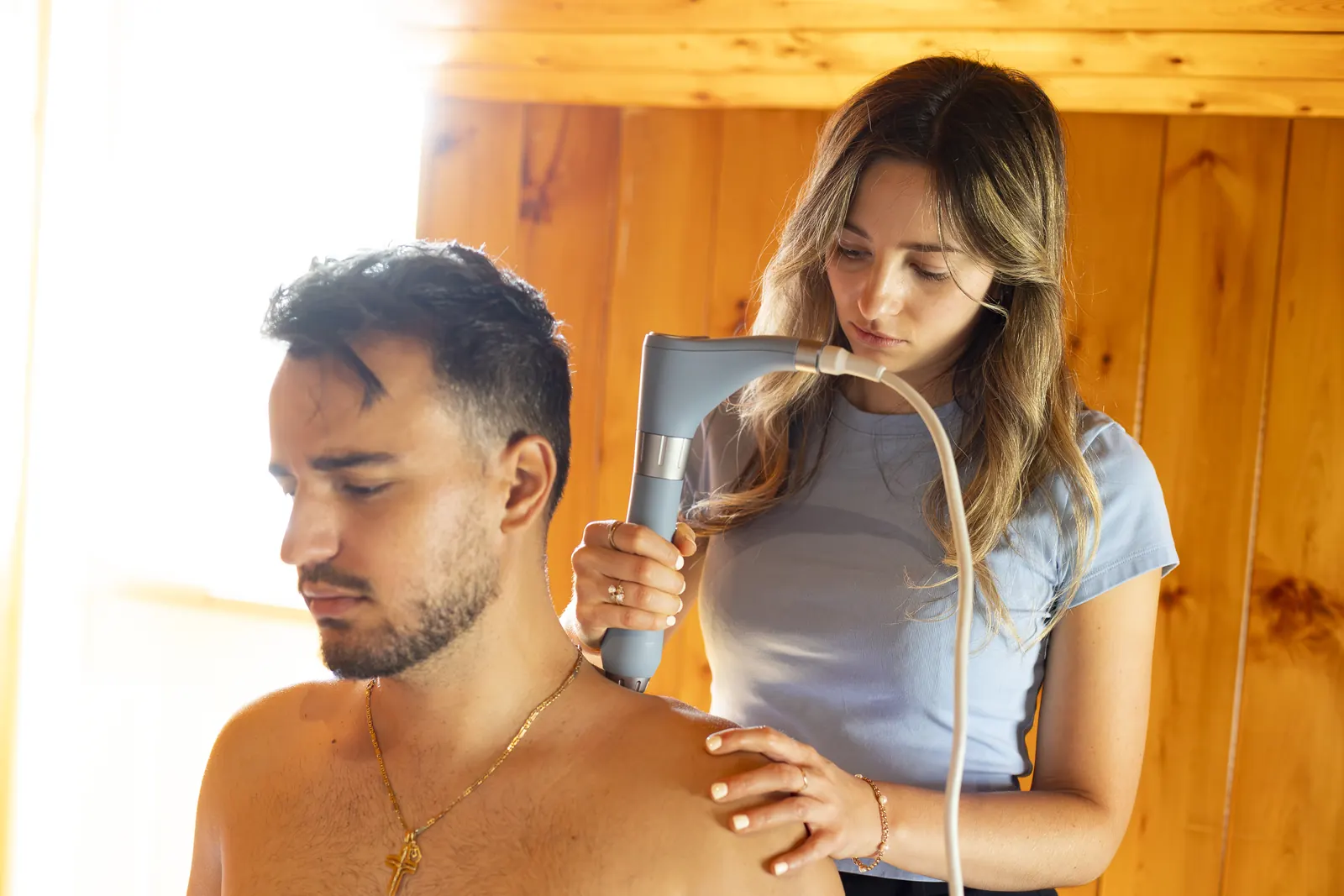
Shockwave therapy, also called extracorporeal shockwave therapy (ESWT), uses a handheld device to send short bursts of sound energy to a painful area. The waves pass through the skin and target the tissue underneath. At Endura Physio, we use a BTL shockwave unit and adjust the intensity based on your tolerance and the specific area being treated.
How ESWT influences the tissue healing process
For stubborn tendon and heel problems, the goal of ESWT is to stimulate the area so your body can restart a healing response. This stimulation may help support local circulation and change how the tissue responds to load over time. It is important to remember that shockwave therapy does not replace rehab. Instead, it works best when combined with the right exercise plan, reduced exposure to the primary trigger, and a gradual return to activity.
Shockwave therapy vs other treatment options
We may add shockwave therapy to your treatment plan when exercise and activity changes have not been enough, or when pain returns as soon as you increase walking, work tasks, or training. It can be a good option for people who want to try a non-surgical approach before considering injections. During your assessment, your physiotherapist will explain your options, realistic expectations, and what to do between sessions to support healing.
BTL shockwave unit used at Endura Physio
At Endura Physio, shockwave therapy (ESWT) is delivered with a BTL shockwave unit. This device lets your physiotherapist control the treatment dose by adjusting intensity and pulse rate based on the area being treated and the tissue's sensitivity.
What this means for you:
- The intensity can be increased or reduced during the session to keep it tolerable.
- The settings can be adjusted for smaller areas, such as the heel, or broader tendon areas, such as the Achilles.
- We can track response across sessions by keeping settings consistent when appropriate.
Conditions we can treat with shockwave therapy
Foot and heel pain (plantar fasciitis, heel pain)
Shockwave therapy is often used for stubborn heel pain linked to plantar fasciitis. If first-step pain and walking discomfort have not improved with rest, footwear changes, or basic rehab, ESWT may be added to your recovery plan.
Achilles and calf tendon pain (Achilles tendinopathy)
Achilles tendinopathy and calf tendon pain often flare with running, hills, or jump training. Shockwave therapy may be considered when symptoms keep returning as you increase mileage or speed.
Knee tendon pain (patellar tendinopathy)
Pain at the front of the knee, especially with stairs, squats, or jumping, can involve the patellar tendon. ESWT can be used alongside strengthening and load changes when the tendon remains sensitive.
Elbow pain (tennis elbow, golfer’s elbow)
Repetitive gripping, lifting, or computer work can irritate the tendons at the elbow. Shockwave therapy is commonly used for tennis elbow and may also be used for golfer’s elbow, depending on your assessment findings.
Shoulder calcifications and stubborn tendon pain (calcific shoulder pain)
Some shoulder issues involve calcifications or long-lasting tendon irritation that limit reaching and overhead activity. Shockwave therapy may be considered when the pain is localized and these symptoms continue.
Trigger points and chronic muscle pain
For some people, focused shockwave therapy is used to treat tight, painful trigger points and long-lasting muscle pain. Your physiotherapist will confirm whether the main driver is muscle, tendon, or joint, as the care plan changes based on the source.
Shockwave Therapy (ESWT) for Plantar Fasciitis and Tendon Pain
If heel pain is triggered by your first steps in the morning or after sitting, your plantar fascia may be irritated. Shockwave therapy targets the sore area at the heel or along the fascia. In addition to the shockwave sessions, we also suggest footwear, calf and foot strengthening, and ideal pacing for walking and standing to support healing.
Tennis elbow often presents as pain on the outside of the elbow during gripping, lifting, or repetitive wrist activities. While focused shockwave therapy can be used to treat the irritated tendon, we also address the root cause, such as weak shoulder or forearm strength, high workload, or technique issues in sport or the gym.
Achilles tendon pain often starts slowly and then spikes when training load increases. Shockwave therapy may be needed when the tendon remains reactive despite smart training changes. A typical care plan usually includes a gradual strengthening program, guidance on hills and speed work, and return-to-run steps that limit flare-ups.
Some shoulder problems involve calcifications or stubborn tendon pain that makes reaching and overhead movement painful. If your assessment supports this pattern, shockwave therapy can be part of your treatment plan, alongside mobility work, shoulder blade and rotator cuff strengthening, and setting clear activity limits as symptoms settle.
How many shockwave therapy sessions are typically needed?
How sessions are spaced out
Shockwave therapy is usually delivered in a short series of treatments, rather than in a single visit. For plantar heel pain, some hospital pathways use three sessions, often spaced about a week apart. At Endura Physio, the session schedule is decided after your assessment and is adjusted based on how the tissue responds after each session.
What progress often looks like from week to week
For some people, small changes may be noticeable after the first session, while for others, significant change appears once the tendon or fascia can handle more load. We track progress with simple measures such as first-step pain, walking tolerance, stairs, or sport drills. Our goal is for you to experience fewer flare-ups and achieve better function.
When we pause treatment, adjust care, or refer you to another provider
We adjust the care plan if your pain spikes, the area stays very sore, or the findings change after re-testing. If there is little improvement after a fair trial, we may shift to a different treatment plan, suggest you speak with your doctor about imaging, or refer you to another provider if needed. Protocols vary, and ESWT may be delivered in one or several sessions depending on the condition and approach.
Shockwave therapy alongside physiotherapy for better results
Load management and strength progressions
Shockwave therapy can help settle a stubborn tendon or heel problem, but the tissue must still be able to handle walking, work, and sport. That is why we also manage how much stress the area takes on each day. Your physiotherapist helps you:
- Temporarily reduce exposure to the main trigger, such as long walks, jumping, hills, heavy gripping, or overhead lifting
- Stay active by suggesting safer activities you can continue to participate in while symptoms settle
- Increase strength slowly, and periodically re-test the movements that used to cause a flare-up
Mobility and movement changes that reduce flare-ups
Certain types of pain tend to return because the same movement pattern or setup continues to irritate the area. We look at which movements or positions are stressing the sore area and work on practical ways to reduce that stress, such as:
- Improving ankle and big toe movement for plantar fasciitis, heel pain, and Achilles pain
- Focusing on hip and knee control for knee tendon pain relief
- Developing better shoulder blade and wrist control for elbow and shoulder pain
- Adjusting work and sport techniques to reduce repeated strain
Return to sport and return to work planning
Once your pain is stabilized, we help you work toward your goals. For runners, that often means a step-by-step return to running with clear rules for volume and intensity. If your goal is to return to work, it can mean adjusting the weight, speed, or frequency of tasks that trigger symptoms, then slowly increasing tolerance over time.
Why choose Endura Physio for shockwave therapy in the West Island
Our process starts with a physiotherapy assessment
Shockwave therapy works best when the right tissue is treated, and the care plan aligns with your goals. At Endura Physio, we start with a physiotherapy assessment and then decide whether ESWT makes sense for your case. If it does, we combine it with rehab to increase your tolerance for the activities that trigger pain.
Care for sport and day-to-day pain
Our team treats sports injuries, repetitive strain, and long-lasting pain. We focus on clear explanations, progress you can track, and simple at-home recovery steps you can follow between visits.
Sainte-Geneviève clinic location in the West Island, Montreal
Endura Physio is located in Sainte-Geneviève and serves the West Island of Montreal. If you drive choose to drive, parking is available behind the clinic.
CNESST and SAAQ paperwork and billing steps
If your care is linked to a workplace injury or a car accident, we can explain which documents you need and how billing and reimbursement work. Our guidance and instructional information help reduce back-and-forth and keep your treatment moving forward.